Project Story
“Titanic”: The Legend That Sank to the Ocean Floor
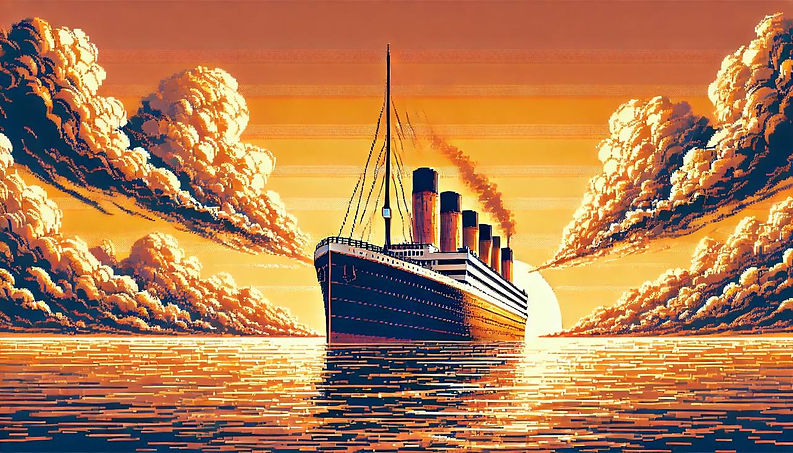
The Titanic was the greatest engineering marvel of the early 20th century — a massive ocean liner built to conquer the Atlantic. It was a floating palace, a symbol of human ambition, and was believed to be unsinkable. But one fateful night turned it into a tragic reminder of nature’s unforgiving power.
🛠️ The Creation of a Giant
The Titanic was launched in 1911 in Belfast, and its dimensions were staggering: 269 meters long, 53 meters high, and weighing 46,328 tons. Onboard, passengers enjoyed lavish interiors inspired by the Palace of Versailles, gourmet restaurants, a swimming pool, a gym with mechanical horses and camels, and an atmosphere of unmatched luxury. It was a ship designed for the world’s elite.
⚓️ The Ill-Fated Voyage
On April 10, 1912, the Titanic set sail from Southampton on its maiden voyage to New York City. Onboard were more than 2,200 passengers and crew members. The ship made stops in Cherbourg (France) and Queenstown (now Cobh, Ireland) before heading into the vast Atlantic. People on the docks waved goodbye, unaware it was the ship’s last departure.
🌑 The Fateful Night: April 14, 1912
The night was clear and starry, but moonless. The sea was eerily calm, making icebergs nearly invisible without waves crashing against them. At 11:40 PM, lookouts spotted a massive iceberg directly ahead. “Hard to starboard!” came the cry, but it was too late.
The iceberg grazed the starboard side, tearing open a 90-meter-long gash. Water immediately began flooding the lower compartments. The Titanic was designed to stay afloat with four flooded compartments — but six were compromised. The ship’s fate was sealed.
🚨 The Struggle for Survival
The crew sent distress signals, but the nearest ship, the Californian, never responded — its radio operator had switched off for the night. The Carpathia, however, received the distress call and raced to help, but it was four hours away.
There were only 20 lifeboats — enough for half the passengers. In the chaos, some boats were launched half-empty, while others were overcrowded. The rule was “women and children first”, leaving many men behind.
❄️ The Final Moments
By 2:00 AM, the bow of the Titanic was fully submerged. The deck tilted sharply as passengers clung to railings, and the sound of groaning metal filled the night. The immense strain caused the ship to break in two.
At 2:20 AM, the Titanic vanished beneath the icy waves. The water was -2°C (28°F) — cold enough to cause hypothermia within minutes. Most people who ended up in the water didn’t survive.
🛟 The Aftermath
At 4:00 AM, the Carpathia arrived and rescued 706 survivors. The remaining 1,500 souls were lost to the frigid depths. The disaster shocked the world and led to significant changes in maritime safety regulations, including the requirement for lifeboats for all passengers.
🌌 The Titanic: A Timeless Memory
Today, the wreck of the Titanic rests 3,800 meters below the surface of the North Atlantic. It remains a haunting testament to human ambition, courage, and loss. The story of the Titanic is more than a tale of tragedy — it’s a powerful reminder that no feat of engineering can surpass the forces of nature.
“Titanic: The Game” — The Story Behind Our Project
It all started with a simple idea — to create a game that wouldn’t just entertain, but would transport players through time. We wanted something unique, something meaningful. That’s when the Titanic became the heart of our project. This legendary ship is more than just a vessel; it’s a symbol of an era, a tragedy, and a timeless memory.
💡 Where Did the Idea Come From?
During one of our brainstorming sessions, we tossed around different themes: fantasy worlds, historical events, and adventure quests. But when someone said the word “Titanic”, the room went quiet. Then came the nods of agreement. We knew we’d found our idea.
⚓️ Why Titanic?
Because its story isn’t just about a shipwreck — it’s about people, their dreams, ambitions, and the choices they made. We wanted to create a game that wouldn’t just tell the story but would let players experience it firsthand.
🎯 Our Goal
As a team, ShoSho? set a bold challenge for ourselves: to build a game that would:
• 🎞️ Recreate the atmosphere of 1912: From the lavish first-class salons to the modest third-class cabins.
• 🧩 Be more than just a game — a historical quest: Players can explore the ship and discover real stories of passengers instead of just walking through decks.
• 🕰️ Bring the events of that night to life: We want players to understand how the tragedy unfolded, what decisions were made, and how people from different social classes reacted.


Our Team
ShoSho: Where the Past Comes Alive, and History Becomes an Immersive Adventure You Can Experience Firsthand.
We’ve poured our hearts into this project, with every decision carefully thought out and every step a result of our hard work. Our goal was not just to tell the story of the Titanic, but to let you feel the atmosphere of the era, immerse yourself in its tragedy and heroism. We take pride in combining our talent, creativity, and love for history to bring you not just a game, but a true journey through time. This is our dream, and we can’t wait to share it with you!